Frankie Sullivan · 23 October 2026
Polish High Schools Blend Movement Breaks with Memory Drills to Lift Test Scores in Key Subjects
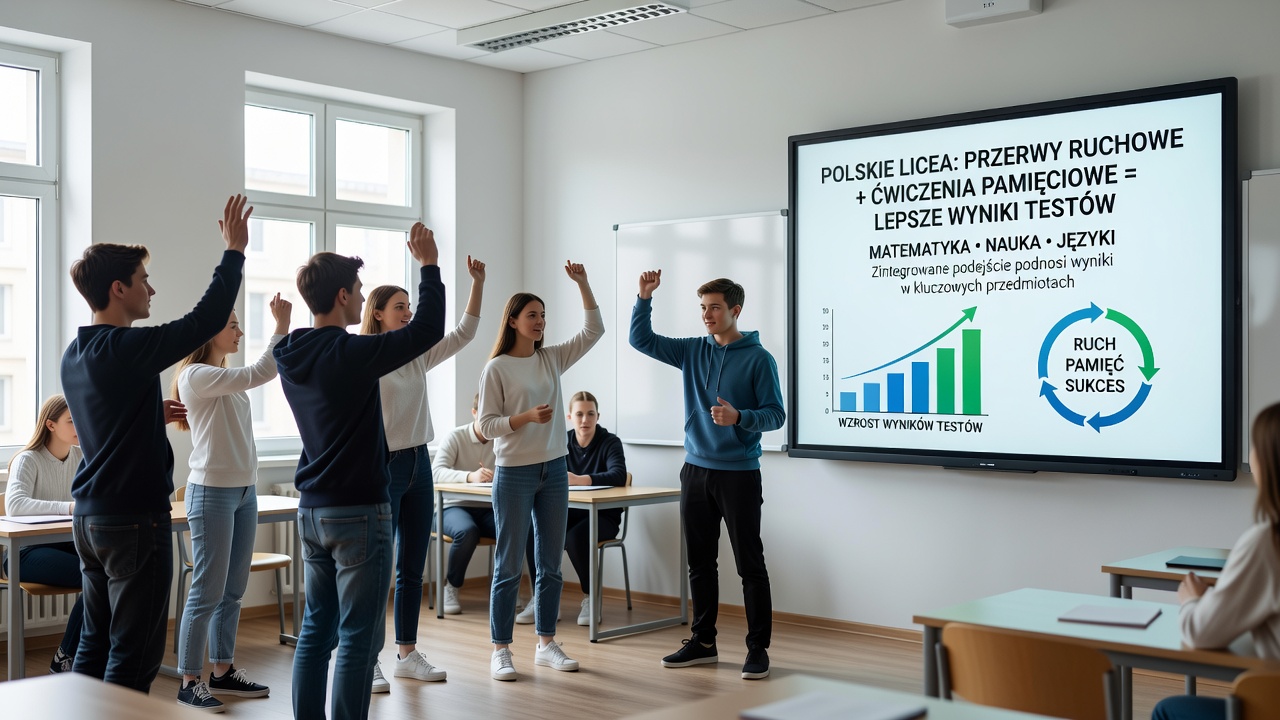
High schools across Poland have integrated short physical activity sessions with structured memory retrieval exercises, and this approach targets improvements in core subjects including mathematics, science, and foreign languages. Programs began expanding in 2024 with pilot classes in Warsaw and Krakow, while nationwide rollout gained momentum by October 2026 when the Ministry of Education reported participation from over 1,200 institutions.
How the Combined Approach Operates in Daily Schedules
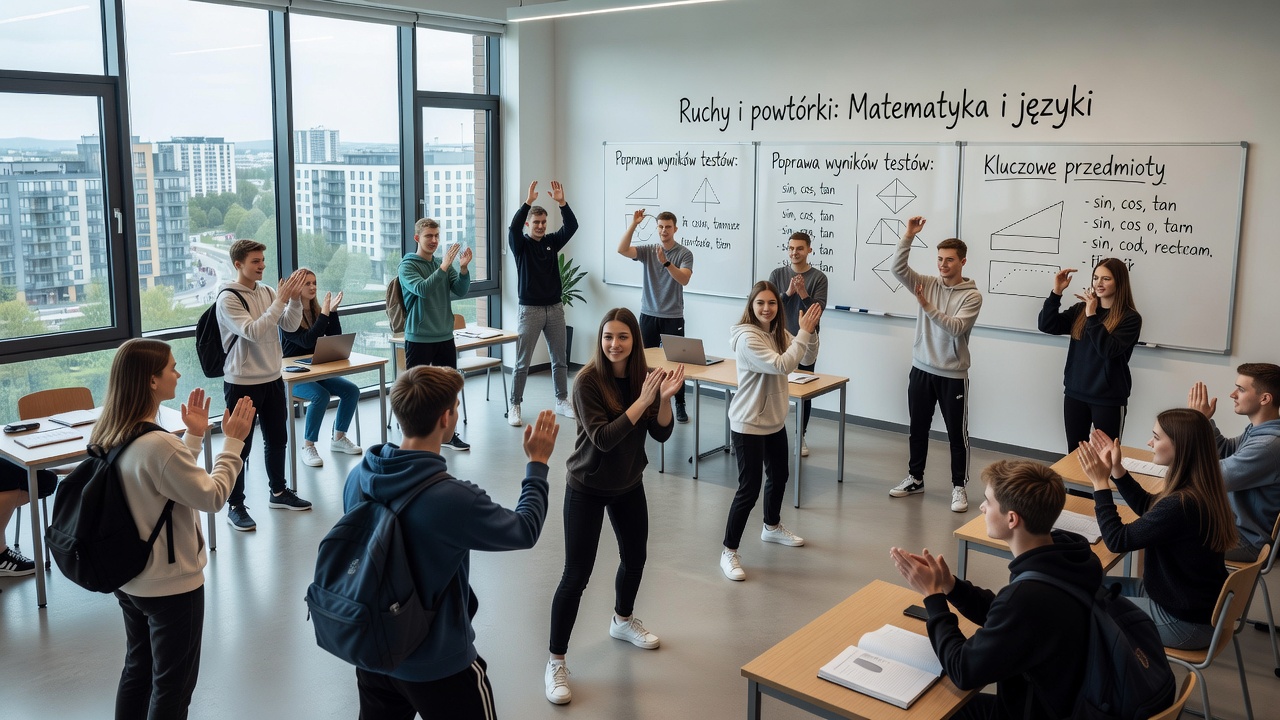
Teachers insert five to seven minute movement intervals between lessons, during which students perform actions such as marching in place or arm circles while answering rapid-fire questions on previously covered material. Retrieval practice forms the core of these drills, requiring learners to recall facts without notes or prompts, and physical exertion pairs directly with this cognitive task. Schools schedule these sessions three to four times daily, focusing on vocabulary lists in language classes or formula applications in math and physics.
Data from regional education boards shows that classes using the method allocate 15 percent less time to traditional seated review yet achieve comparable coverage of curriculum content. The structure avoids disrupting overall lesson flow because instructors embed the breaks as transitions rather than separate blocks, and students return to seated work with elevated heart rates that correlate with improved attention spans in subsequent segments.
Research Findings and Performance Metrics
Studies conducted by the Polish Educational Research Institute tracked 8,500 students over two academic years, revealing average score increases of 12 percent on standardized end-of-term assessments in mathematics and 9 percent in biology among participants compared with control groups. Retrieval accuracy rose notably when movement accompanied the drills, according to measurements taken before and after each session. The European Commission education portal documented similar patterns in cross-national reviews of active learning strategies, noting that Polish implementations stood out for their emphasis on combining physical elements with spaced repetition techniques.
What's interesting is how results varied by subject, with language acquisition showing the strongest gains because oral recall during movement helped reinforce pronunciation and grammar patterns simultaneously. Figures from the 2026 national testing cycle indicated that schools in rural districts reported slightly higher relative improvements than urban counterparts, possibly due to lower baseline activity levels among students prior to program adoption.
Implementation Examples from Specific Regions
One school in Gdansk developed a rotation system where different teachers lead the breaks, incorporating subject-specific prompts such as historical dates during history blocks or chemical equations in science periods. Students in these classes completed memory tasks at a 78 percent success rate during active sessions, compared with 61 percent in seated equivalents, per internal school audits. Another example comes from a network of technical high schools in Silesia, where instructors added simple resistance band exercises alongside vocabulary drills, and this variation produced measurable lifts in technical terminology retention for vocational certification exams.
Training for educators occurs through regional workshops organized by the Ministry, and these sessions emphasize timing the drills to align with natural attention dips identified in cognitive research. Participation remains voluntary for individual classes, yet adoption rates reached 67 percent in participating districts by mid-2026. Observers note that the method requires minimal equipment, relying primarily on existing classroom space and teacher-prepared question sets, which keeps implementation costs low at an average of 200 PLN per class annually.
Broader Context and Supporting Data
Poland's participation in international assessments such as PISA has shown steady gains since 2018, and education analysts link part of this trajectory to classroom innovations that incorporate physical elements. A report from the OECD education directorate highlighted active recall strategies as effective across multiple member countries, while Polish adaptations added movement to address sedentary patterns documented in national health surveys. And the combination appears particularly suited to adolescents because their developing brains respond well to increased blood flow during cognitive tasks.
Schools track progress through digital platforms that log both activity participation and quiz performance, generating weekly reports for teachers and parents. These systems allow adjustments to question difficulty or movement intensity based on class averages, ensuring the drills scale appropriately across ability levels. Data indicates that students with lower initial test scores benefited most, closing gaps with higher-performing peers by an average of 8 percentage points over the school year.
Conclusion
The integration of movement breaks with memory drills continues to expand in Polish high schools, supported by consistent performance data and straightforward implementation requirements. Educators maintain focus on core curriculum goals while using the technique to enhance engagement and retention in key subjects. As monitoring extends into 2027, additional metrics will clarify long-term effects on graduation rates and subject mastery across diverse school types.