Frankie Roth · 20 November 2026
Poland's Strategic Efforts to Train Teachers in AI Technologies and Educational Applications
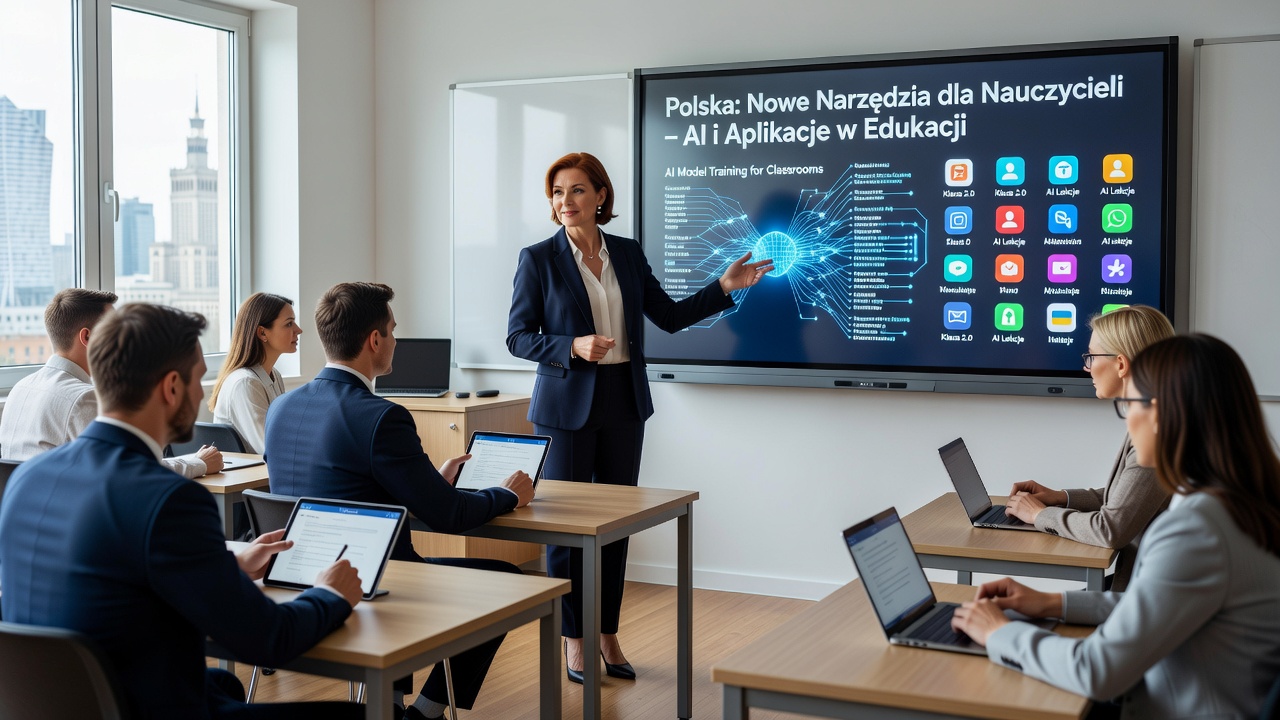
Poland has rolled out nationwide programs to prepare educators for artificial intelligence systems and mobile application platforms that are reshaping classroom instruction across primary and secondary schools, with key milestones scheduled for November 2026 when additional funding phases activate under the Ministry of Education and Science.
Government data shows that more than 85,000 teachers enrolled in digital competency courses during the 2025 academic year, focusing on tools that automate grading, personalize learning paths, and manage student engagement through tablet-based interfaces. These initiatives stem from the National Digital Strategy, which allocates resources for hardware distribution alongside software training modules developed in partnership with regional universities.
Core Components of the Training Framework
Training modules cover machine learning basics applied to student performance analytics, along with practical sessions on apps that deliver real-time feedback during lessons. Instructors learn to integrate platforms such as adaptive reading applications and collaborative coding environments that run on school-issued devices, while sessions also address data privacy protocols required under European Union regulations.
Regional centers in Warsaw, Krakow, and Gdansk host week-long workshops that combine online simulations with in-person demonstrations, and participants receive certification upon completion of assessments that test both technical proficiency and lesson-planning integration. Figures from the ministry indicate that 62 percent of trainees come from rural districts where broadband access has improved through recent infrastructure investments.
Partnerships Driving Implementation
Collaboration with technology firms supplies customized applications tailored to Polish curriculum standards, while academic institutions contribute research on effective deployment methods. One study coordinated by the University of Warsaw tracked 1,200 classrooms using AI-assisted math tools and reported measurable gains in problem-solving accuracy after six months of consistent use.

Additional support arrives through EU-funded exchanges that allow Polish educators to observe practices in other member states, and domestic pilot projects test voice-activated assistants for language instruction in early grades. Observers note that these efforts align with broader goals outlined in the European Commission's digital education action plan, which emphasizes teacher readiness as a foundation for equitable technology access.
Challenges Encountered During Rollout
Internet connectivity gaps persist in some eastern provinces despite upgrades, and older staff members sometimes require extended support to master interface navigation. Ministry reports document that schools address these issues through peer-mentoring networks where experienced users guide newcomers, and dedicated help desks operate during school hours to resolve technical queries promptly.
Budget allocations cover device maintenance and subscription fees for core applications, yet administrators must balance these expenditures against competing needs such as textbook replacements. Data compiled by the Central Statistical Office reveals steady growth in digital tool adoption rates, rising from 34 percent of classrooms in 2023 to 71 percent by mid-2026.
Measured Outcomes and Ongoing Adjustments
Early evaluations track improvements in student engagement metrics, particularly in subjects where apps provide immediate practice loops that reinforce concepts introduced during direct instruction. Teachers report streamlined administrative tasks after adopting automated attendance and progress-tracking features, freeing time for instructional planning.
Adjustments continue based on feedback collected through annual surveys, with November 2026 marking the introduction of advanced modules on ethical AI use and bias detection in educational algorithms. Those who have completed initial training often return for refresher courses that incorporate newly released application updates.
Conclusion
Poland's coordinated approach combines policy directives, institutional partnerships, and targeted professional development to build teacher capacity for AI and app-driven environments, with measurable progress documented through enrollment numbers and classroom adoption statistics. Continued monitoring will determine how these investments translate into sustained learning gains as the November 2026 phases unfold.