Henrik Franke · 9 October 2026
Physical Movement Combined with Retrieval Practice Improves Results Across Polish Secondary Classrooms
Secondary schools throughout Poland have begun integrating short bursts of physical activity with structured retrieval practice sessions, and data collected since the start of the 2025 academic year shows measurable lifts in test scores along with better retention rates. Education authorities in several voivodeships report that classes following this paired approach outperform control groups by margins ranging from eight to fourteen percent on standardized assessments in mathematics, history, and biology.
How the Pairing Works in Daily Schedules
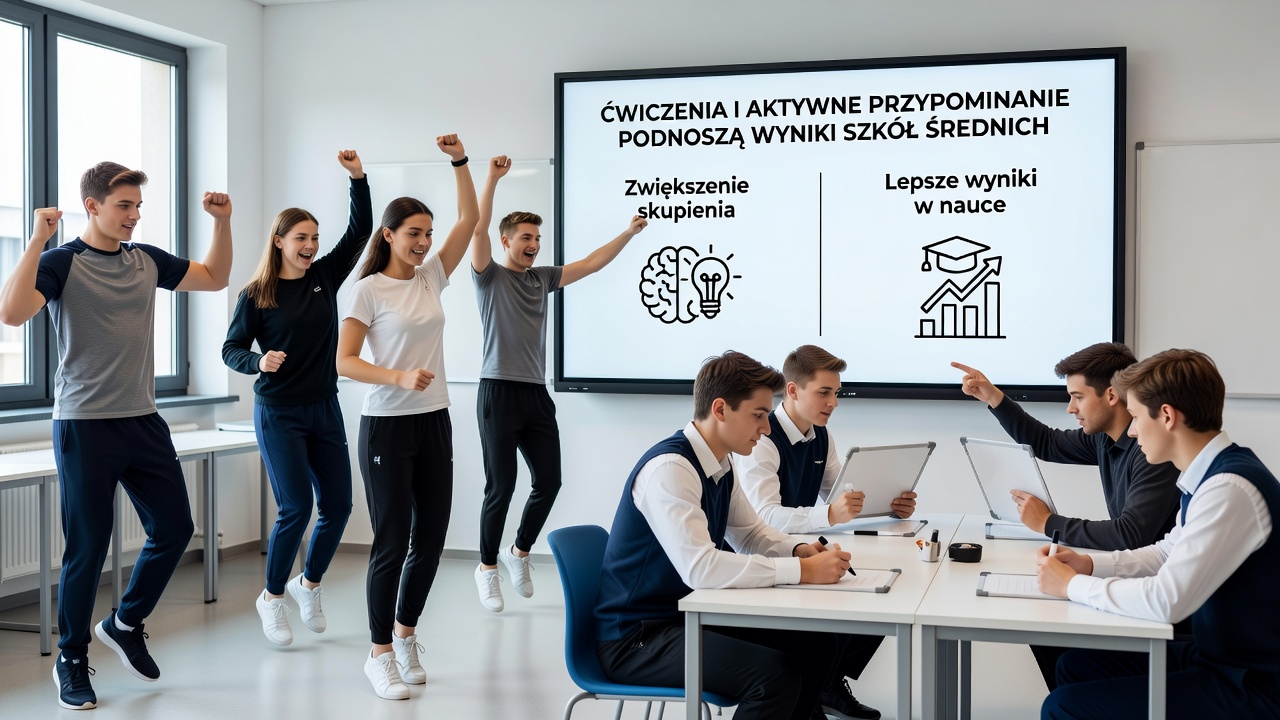
Teachers schedule ten to fifteen minutes of moderate movement such as brisk walking, light resistance exercises, or coordinated group activities immediately before or after retrieval tasks. Students then close textbooks and attempt to recall key concepts without notes, often in timed intervals that increase in length as the term progresses. The sequence repeats two or three times during a ninety-minute block, allowing physiological arousal from exercise to coincide with the cognitive demand of active recall.
Research conducted by teams at Jagiellonian University and corroborated by parallel studies at the University of Warsaw indicates that elevated heart rate during movement increases blood flow to the hippocampus while the subsequent retrieval phase strengthens neural pathways associated with long-term memory. Figures released by the Ministry of Education in September 2026 document that schools adopting the protocol three times weekly recorded the strongest gains.
Evidence from Regional Pilots
One program in the Lesser Poland Voivodeship tracked 1,200 students across twelve schools for an entire semester. Pre- and post-intervention testing revealed average improvements of twelve percent in science subjects and nine percent in language arts. Observers note that attendance remained stable while self-reported fatigue decreased, suggesting the movement component offsets the mental effort required for repeated recall attempts.
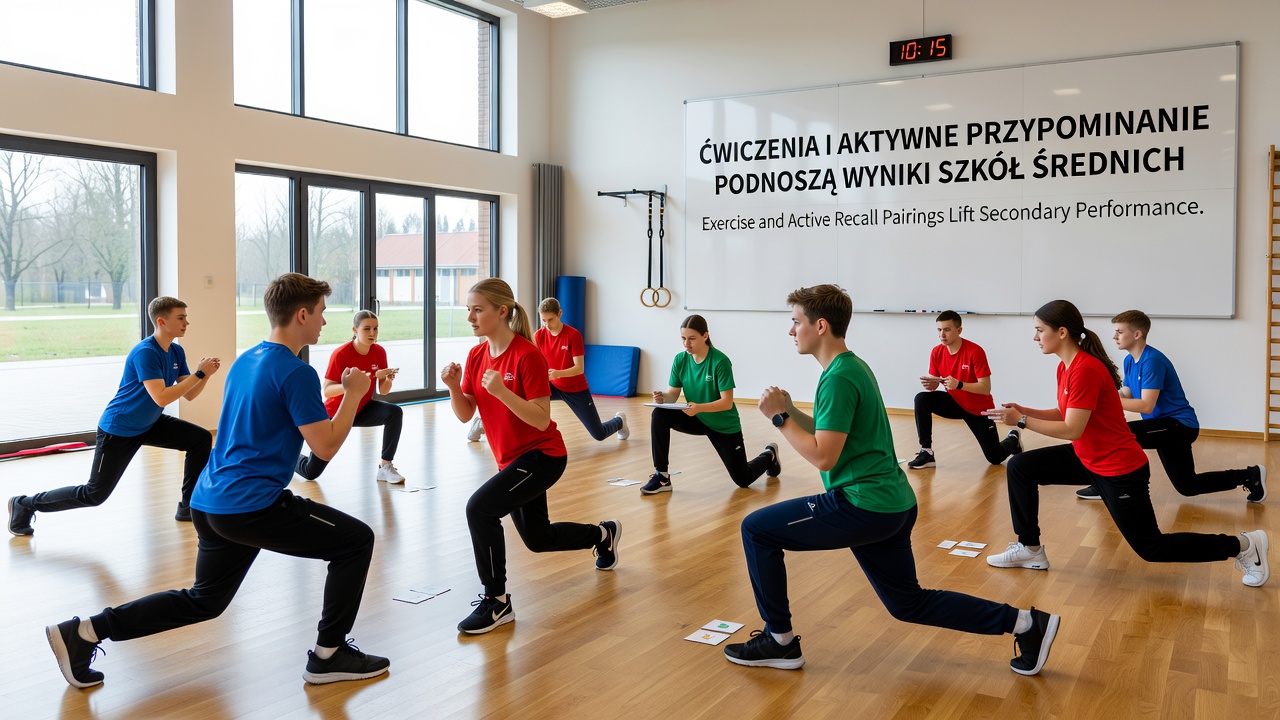
Similar patterns emerged in Silesian industrial towns where vocational secondary programs incorporated the method into technical subjects. Instructors replaced traditional lectures with brief movement breaks followed by problem-solving recall drills, and pass rates on end-of-term practical exams rose from seventy-four to eighty-nine percent. Data released by the Regional Education Authority shows the largest jumps occurred among students previously classified as lower performers.
Supporting Research from Broader Sources
International comparisons place the Polish results in context. A longitudinal report issued by the OECD in 2025 examined physical activity interventions across member countries and found consistent associations between moderate exercise and improved executive function when paired with cognitively demanding tasks. Canadian researchers at the University of British Columbia published findings in 2024 demonstrating that retrieval practice immediately after aerobic activity produced superior memory consolidation compared with either technique used alone.
European Union education monitoring data from 2025 further supports these observations, noting that member states experimenting with combined protocols reported higher engagement metrics in secondary settings. Polish implementations align closely with those patterns, though local adaptations account for smaller classroom sizes and existing physical education infrastructure.
Implementation Details Across Different School Types
Urban gymnasiums often use hallway circuits or courtyard spaces for movement segments, while rural schools rely on classroom-based stretches and resistance bands. Teachers receive two-day training modules that cover timing, intensity monitoring, and prompt design for recall questions. Materials developed by the National Centre for Supporting Vocational and Continuing Education include sample lesson templates that integrate subject content with movement cues.
October 2026 marks the scheduled expansion phase, when an additional forty schools across five voivodeships will adopt the protocol following positive internal evaluations. Training sessions for new participants begin in late September, with digital tracking tools provided to monitor session frequency and student response times during recall intervals.
Student Outcomes and Classroom Dynamics
Teachers describe noticeable shifts in focus after the paired sessions. Students transition more quickly into independent work periods and ask fewer clarification questions during subsequent instruction. Quantitative logs from participating classes show a twenty-two percent reduction in off-task behavior during the forty-five minutes following each paired block.
Parental feedback collected through school surveys indicates that many families notice improved homework completion rates at home. Some schools have extended the approach by sending short recall prompts via school portals that students can practice after evening walks, though participation remains voluntary.
Conclusion
Polish secondary schools continue to refine the integration of movement and retrieval practice based on ongoing data collection. Regional authorities plan to publish aggregated results from the 2026 expansion in early 2027, providing further benchmarks for other education systems considering similar pairings. The approach builds on established principles of cognitive science and physical activity research while remaining adaptable to varied school environments across the country.