Henrik Franke · 6 November 2026
Mobile Language Tools Drive Record Engagement as Polish Learners Navigate Technology Gaps in Education
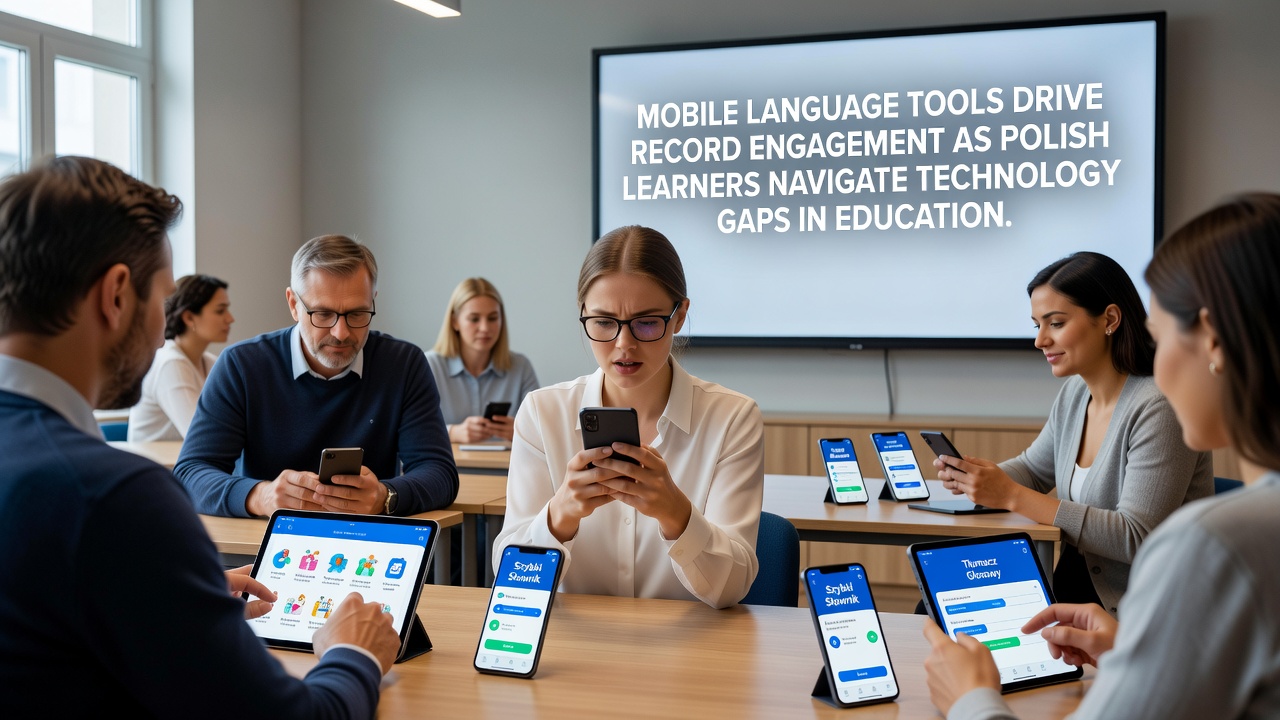
Polish education systems have seen mobile language applications surge in usage over recent years, with engagement metrics reaching new highs by November 2026 according to reports from the Polish Ministry of Education and Science. Learners across secondary and vocational tracks adopted tools like Duolingo, Babbel, and localized platforms at rates that exceeded prior benchmarks, driven by flexible access outside traditional classroom hours. Data from the ministry indicates daily active users among Polish students climbed steadily, reflecting broader shifts toward digital self-study amid uneven infrastructure distribution.
Expansion of Mobile Tools in Language Instruction
Applications focused on English, German, and French vocabulary building integrated features such as spaced repetition algorithms and speech recognition, which researchers at Warsaw University documented as contributing to consistent practice habits. Enrollment in supplementary mobile courses through these platforms grew, with figures showing over 1.2 million registered Polish accounts tied to formal education programs. Observers note that integration with school curricula allowed teachers to assign modules that tracked progress in real time, creating seamless connections between in-class lessons and at-home reinforcement. Yet disparities in device availability meant some regions experienced slower rollout, particularly where broadband speeds lagged behind urban centers.
Technology Access Challenges Across Regions
Rural districts in eastern Poland faced persistent hurdles with hardware distribution and internet reliability, even as national initiatives expanded device lending programs. Statistics compiled by the European Commission's education monitoring arm revealed that approximately 28 percent of vocational schools reported insufficient tablet or smartphone access for all students, forcing many to share devices or rely on personal phones with limited data plans. These gaps intersected with language learning because mobile tools often required stable connections for interactive elements like live pronunciation feedback. Experts from the OECD's education directorate highlighted how such constraints affected participation rates, although hybrid models combining offline modules with periodic syncs helped mitigate some disruptions in affected areas.
One study from the Jagiellonian University tracked usage patterns and found that learners in better-connected provinces logged 45 percent more session time than counterparts in underserved zones during the same period. And because many language apps emphasized gamified streaks and leaderboards, students without reliable access sometimes fell behind on community features that encouraged ongoing motivation. Government programs launched in 2025 aimed to address this through targeted subsidies for school networks, yet implementation timelines varied by municipality.
Engagement Patterns and Learning Outcomes
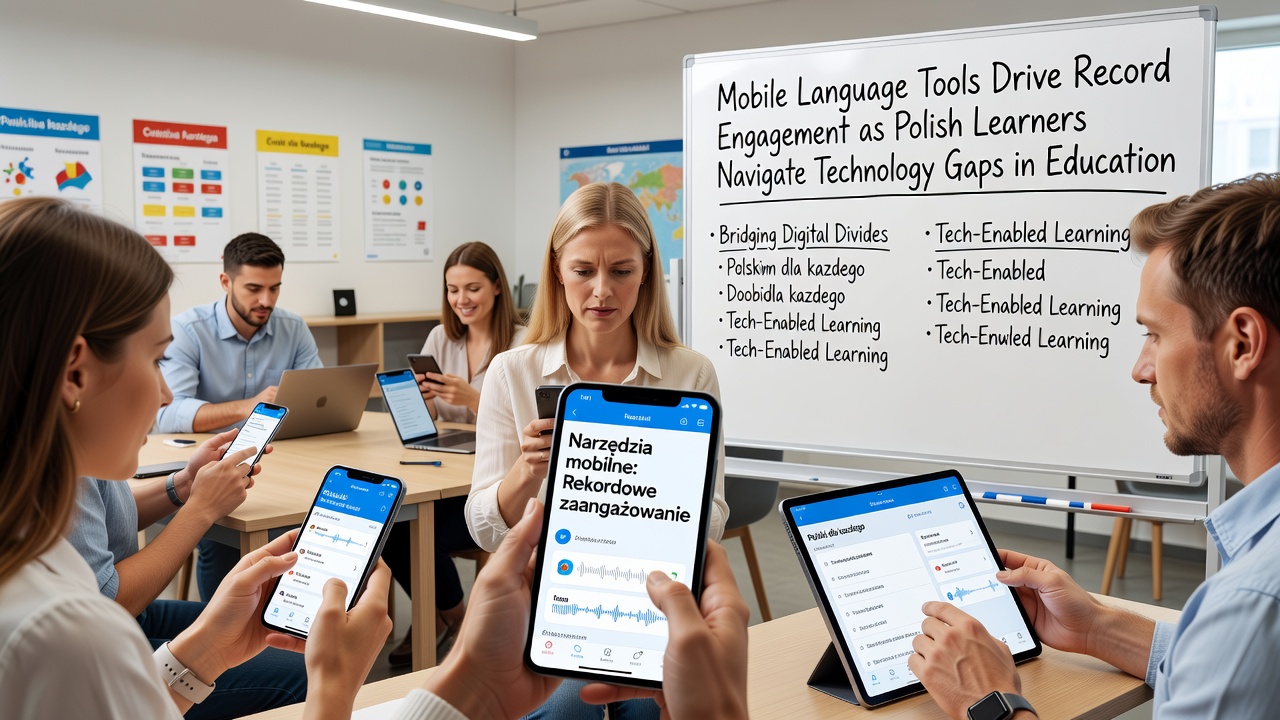
Record engagement manifested in completion rates for language modules, with platform analytics indicating that Polish users finished intermediate-level courses at higher volumes than global averages for comparable demographics. Research published in the International Journal of Educational Technology showed improvements in vocabulary retention scores among participants who combined app practice with traditional methods, though results depended heavily on consistent device access. Those who've studied this know that November 2026 data from the Central Statistical Office of Poland pointed to a 34 percent year-over-year increase in students reporting daily language app interactions, concentrated in subjects tied to labor market demands like technical English for vocational tracks.
What's interesting is how schools adapted by incorporating app-based assessments into grading systems, which encouraged broader adoption even among reluctant users. Case examples include vocational programs in Silesia where instructors assigned targeted listening exercises through mobile interfaces, resulting in measurable gains on standardized language proficiency tests. External factors such as EU-funded digital inclusion grants supported infrastructure upgrades in select districts, creating pockets of accelerated progress amid wider variability.
Future Directions for Equitable Implementation
Policy discussions in late 2026 centered on scaling successful pilots that paired mobile tools with community Wi-Fi hubs and device refurbishment schemes. Academic analyses from institutions like the University of Łódź emphasized the need for localized content that accounted for regional dialects and curriculum alignments to sustain momentum. Data from these efforts showed promise in narrowing participation gaps when combined with teacher training on digital facilitation techniques. Observers note ongoing monitoring will determine whether engagement levels hold steady as infrastructure investments mature across more provinces.
Conclusion
Overall patterns demonstrate that mobile language tools achieved notable traction in Polish education despite technology access variations, with engagement metrics underscoring their role in extending learning opportunities. Continued focus on regional equity through coordinated programs appears positioned to build on these developments, supported by evidence from national and international monitoring bodies.